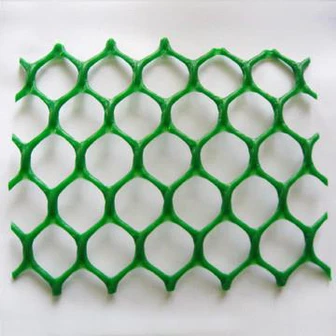
What can a unidirectional geogrid do for a reinforced earth retaining wall?
Advantages of unidirectional geogrid
Practice has proved that the unidirectional geogrid has low elongation (breaking elongation is not greater than 12%), and its creep is very small. The grid is reinforced, reinforced and reinforced foundation, bearing capacity, uneven settlement, and resist formation of soil surface. Low temperature resistance. Adapt to -45 ℃ --- 50 ℃ environment. Applicable to the poor geology of northern frozen soil, frozen soil, and frozen soil with high ice content.
Or highly polluting erosion. When the river is at the zigzag channel, the river will bend and flow along the inherent channel to guide the river. Also to the characteristics of dam and anti-ultraviolet (UV), anti-aging, non-combustion, and non-extended cracks, truly zero pollution. A. When the moisture in the backfill of the retaining wall in the freezing and thawing area is below zero, the volume of ice will become 1.11 times.

Laying construction method for focused unidirectional geogrid
Unidirectional geogrids are used more frequently in reinforced earth retaining walls, so what is its construction method? First, set up the foundation and carry out the construction according to the designed wall surface. When prefabricated reinforced concrete panels are used, they are generally thick. 12-15 concrete is supported on precast concrete foundation. Its width is not greater than 30㎝, its thickness is not less than 20㎝, and its burial depth is not less than 60㎝ to prevent the effects of foundation frost heave. Soft soil needs to be compacted or replaced, and compacted to the required density, which should slightly exceed the wall surface.
铺设 For the reinforcement, the main strength direction of the reinforcement should be perpendicular to the wall surface and fixed by pins. 4. Fill the wall with mechanical filling. The distance between the wheels and the reinforcement should be kept at least 15mm. Geogrid slab overlap requirements, either side by side, or end-to-end, relying on the strength of the roadbed. Before filling the subgrade, the surface of the subgrade needs to be cleaned up, and the impurities such as weeds, humus, debris, and soft soil on the surface of the subgrade are effectively cleaned.